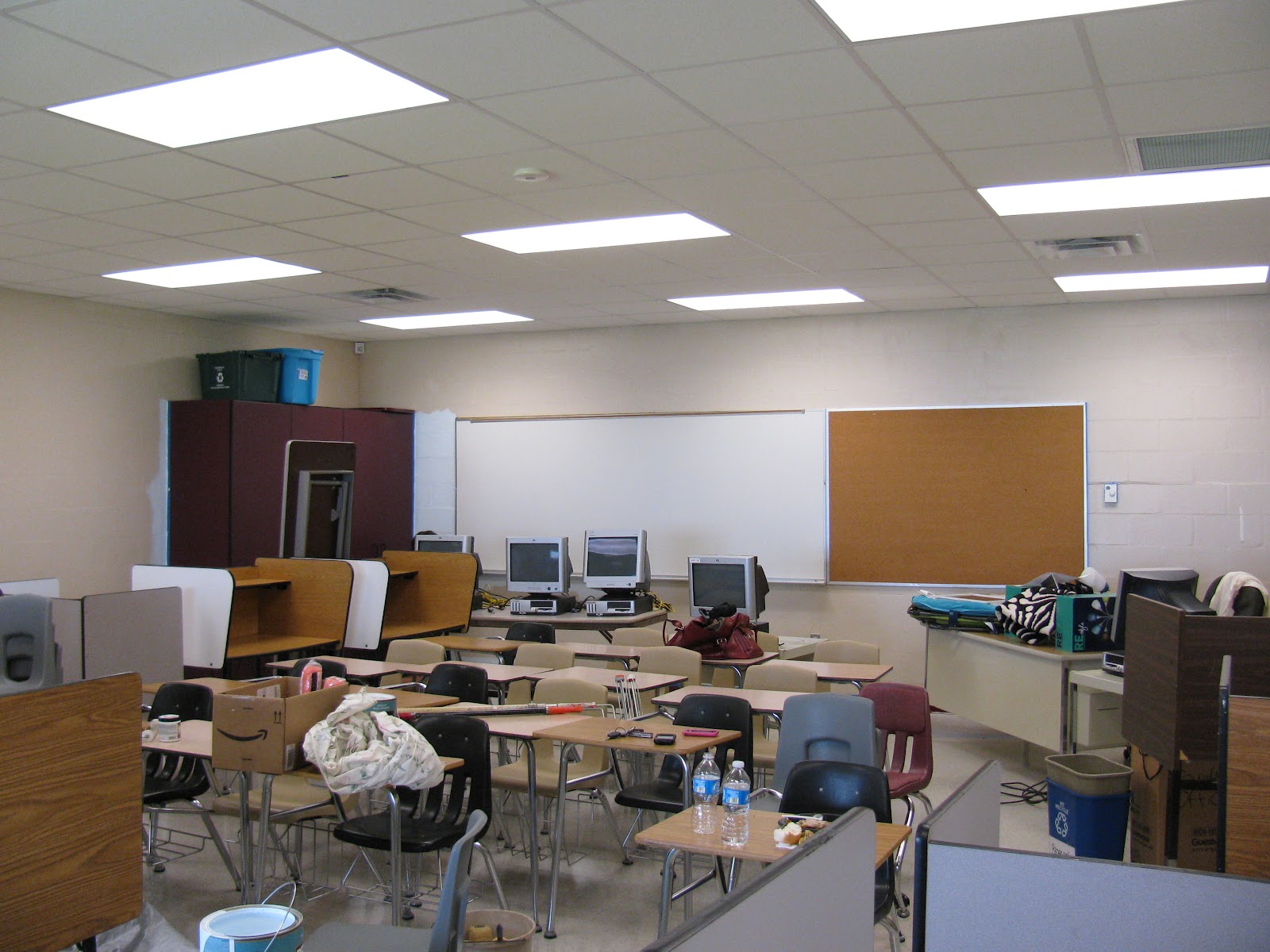
Yesterday your child's education went on hold. It is officially FCAT season in Florida. Don't worry, your child's normal education will resume in two weeks.
Getting ready for school Monday morning, I had to guffaw as I wondered which shoes to wear for FCAT (Florida Comprehensive Assessment Test). I didn't want to make too much noise wearing some sort of clickety-clackety heels. Perhaps in defiance, I wore them anyways.
Let me paint a picture of what it's like to walk in the shoes of a teacher administering the FCAT. Your already early arrival of 7:10 may begin even earlier this day. You report to school well before the sun. The testing headquarters are in the windowless In School Suspension (ISS) room and open at 6:30 am. You walk into the room, where the weary guidance counselors have been transformed into paper-pushing-schedule-making-pencil-sharpening-drones. They are not able to counsel students this time of year as they are tied up in testing preparation. You recount all of your tests and grab your goodie bag. You head to your room to figure out which movie you will be showing that afternoon. Or if you're like me, you plan to finally take the opportunity to do that artsy project whose benefits can not actually be measured.
The students file in begrudgingly, fully understanding the magnitude of the three hour sentencing that awaits them. As their fearless leader, you try to maintain a balance of airy calmness, cheery energy, and solemn dignity. After all, you are being scored today too. Then you have the challenge of getting 300 kids to use a restroom with only 3 stalls each. There are late busses. Most students seem to have gotten a good rest last night, but some are already having a bad day. This is just one test. One day. One snapshot. Yet it weighs so much on them and us. It determines which class they will be in next year: honors, advanced, or intensive. Starting next year, it will determine our pay scale. That's a story for another day. Regardless, the stakes are high.
Finally, all students have arrived and gone to their testing room. It's now time for about 20 minutes of directions and material managing. The test finally begins and I have free time to catch up on grading papers and plan lessons! NOT. We are supposed to walk around the room monitoring the students. If a student is caught cheating, we could get in deep trouble. I'm talking lose your job or certification. I know some teachers will read a book or check their email, but I come from the school of CYA. So I watched those chillins take that FCAT. Okay, at some point I got really antsy and started making a wedding to-do list. Some might think this sounds like a nice break, but there is something rather draining about doing nothing in an environment where there are a million things to do.
My students hardly lifted their nose from their books or their pencils from their paper. Of course, there are the token kids who just want to stare out the window. There are a few short breaks to stand, stretch, and eat some pretzels. Finally, students are done but don't have the energy to celebrate. It's lunch time. I drop off my tests in ISS, this takes 10 minutes as I scored very low in my "ability to survive in a bureaucracy" on my district entrance exam. By the time I grab my lunch and walk to the cafeteria, I am told I have 15 minutes to eat. I protest but they remind me that today is FCAT day. I walk into the teacher's lounge and my teachers are outraged but not surprised that I have been told I have 15 minutes to eat. I go back to speak to my assistant principal, but before I can open my mouth he says, "You get your 30 minutes." He's not all bad. FCAT stresses out everybody.
Too add to the insanity, it's an early release day. We switch classes one more time, and I take my students to our video conference room where we do a virtual field trip. Pretty cool. We learned some things today despite FCAT's best efforts.
How many days are lost to testing in an already very short school year? In an 180 day school year, I estimate that 26 days are used this year in the name of standardized testing. That's 14.4% of our school year dedicated to filling in bubbles as a measure of a student's (and now a teacher's) achievement.
Don't believe me? Here's the breakdown:
4 days for FAIR (3 times a year, but there's always at least one day where the computers don't work and we have to go back)
3 days FCAT (2 days reading, 1 day for math. This is just 6th grade. I'm not counting the 2 weeks where various grades in the school disrupt our schedule for FCAT testing.)
3 days for district writing exams
2 days for school-purchased FCAT practice, Write Score
1 day for Brainchild, a school-purchased web-based FCAT practice "tool"
1 day EPAT, practice software for reading FCAT
2 days district language arts end of semester exams
1 day Stanford Norm Referenced Test (NRT)
2 days practice moving to the correct testing room
7 days to FCAT tutoring
I'm glad I missed the tidal wave that is FCAT in my own Florida education. I graduated in 2004, just barely missing the world of "there is only one right answer." But now I teach it.
I snapped this photo (not during the test!) of my students' confiscated electronic devices. I thought about grabbing the bag and running away. There's a couple grand right there!
This blog reflects a public educator's journey through the endless issues of education. Always trying to keep empathy for students, staff, and the community at the center of reflection.
Tuesday, April 16, 2013
Thursday, February 21, 2013
School Momma
Dear School Momma,
Don't you ever leave me
The day you retire will be
a sad day indeed
Let's be cyborgs
I'll attach a hose from your brain to mine
and download all your wisdom
decades and decades and decades and decades
of truth finding and messing up and getting burned so maybe I don't have to be
But I guess every bird has to leave the nest
Don't you ever leave me
The day you retire will be
a sad day indeed
Let's be cyborgs
I'll attach a hose from your brain to mine
and download all your wisdom
decades and decades and decades and decades
of truth finding and messing up and getting burned so maybe I don't have to be
But I guess every bird has to leave the nest
Sunday, August 19, 2012
The grass is always greener
This summer I took an awesome trip to South Korea and Japan. I think it's true that one of the best parts of a trip is coming home. I felt a deeper understanding of what it is to be American. Let the patriotic music swell. This week, I came back to my classroom with a renewed sense of purpose and an appreciation for the importance of public schooling. These hallowed halls are where we lovingly brainwash our youth with our stories, our hopes, and values.
Many Americans look to countries like South Korea and Japan, throw up their hands in despair, and wail, "How are they doing so well? What are we doing wroooong?" Funny thing is, Asians are looking right back at us. We admire their discipline and high scores. They yearn for our creativity and innovation.
The Two Faces of Hagwons
I think one of the most poignant examples of our differences is South Korea's hagwons. Hagwons are for-profit academies, or cram schools, that students attend after their full day of public school. Think after school tutoring programs on steroids. In 2010, 74% of South Koreans participated in some sort of extra schooling, lengthening their school day from 8am to 10pm. There is immense societal pressure to perform well on college placement exams. In actuality, these exams turn out to be more like life-placement exams. Many point to this stress for the reason why South Korea and Japan boast the highest teen suicide rate. Things have gotten so out of hand that there is now a law that hagwons must shut down by 10pm. In fact, there are Seoul officers that raid non-compliant hagwons based on tips from neighborhood informants. See this article in TIME for more info Teacher, leave those kids alone
A couple years ago, my good friend and college roommate got a job in South Korea teaching English. This summer, I stayed with her and had the privilege of seeing a hagwon for myself. The six elementary students I observed in my friend's classroom were having a grand ol' time learning and laughing in their English class. Would it be better if they had dinner with their families? More time to play soccer? Sure, but the fact is that the pressure to do well is very real, and hagwons offer that edge that students need to succeed in their country. But are they really learning the information? Or are they simply cramming facts to be forgotten after testing? The number of hours that Koreans are spending on education is not the reason why they outperform Americans.
Why are they outperforming us?
Let's encourage our friends and family to think twice before they disparage our country's education system for a lack of achievement on international standardized tests. The fact of the matter is, Americans have never done well on these tests since we first began participating in 1964. That year, we came in 11th place, out of 12 nations in math, yet went on to have the largest economy in the world. We continue to place in the lower quartile, but this does not reflect our achievement as a nation. When you compare our highest achieving students to similar students in other countries we compare very well. The reason we continue to place so low is that we have the highest child poverty rate of any advanced nation in the world. America comes in at a 25% child poverty rate. Twenty-five percent! What brings our scores down is that we have to average in such large numbers of students who live in poverty, compared to Korea's 8%. If you are interested in finding out more, Diane Ravitch always says it better than anyone My View: Rhee is wrong and misinformed
If we really want to raise our scores, we must tackle child poverty. Not a popular political move. It's easier to blame the teachers.
*Fun Facts
1. It is perfectly acceptable to take naps at school. Last year, my friend was told by the school secretary she'd have to come back in a couple of hours as the assistant principal was sleeping.
2. Corporal punishment is still alive and well and I was surprised to learn my friend uses this. She doesn't abuse her students, but she does assign squats as punishment. They'll probably thank her later for their amazing quads.
Monday, June 11, 2012
The end of my 2nd year
I haven't had much time to really reflect on this, my second year of teaching. I started training for summer school yesterday. I want to take the time to remember some things.
This was a challenging year. 4 preps: world geography, math research, language arts, and reading. In a lot of ways it felt like my first year of teaching because I had taken a year off between my first and second year. Also, I had to adjust coming from a small alternative school, where there was much less bureaucracy.
I found that my intensive classes made me a better teacher than my honors classes. They could tell when I was unprepared, and would take that opportunity. I had to be on my game.
Beginning graduate school was a definite plus. It meant I had no time to stop and breathe in life. I didn't get to see my friends and family as much as I would have liked, but it helped shape me. It gave me a bigger picture of education, a solid anchor. An inquiring mind. What are we teaching? Why are we teaching this? Who are we teaching what to whom? Who decides?
I am so thankful for all of the teachers who showed me how to do things- and how not to do things. I had a wonderful mentor teacher. How wonderful to be next door to a master teacher. To step inside her classroom and observe was like stepping up to the table to a delicious meal, when I was very hungry.
Teaching is a spiritual battle.
I wish I had had more fun with my students. I was so focused on getting them to "do the work", I missed a lot of opportunities for joy and play.
I remember (one of) my SAL's at the beginning of the year reminding teachers to "stick to the curriculum". He described it as, "You're moving into a house, the first thing you need to do is check the plumbing. You shouldn't be painting the walls." And I remember thinking, "Painting the walls is important."
This was a challenging year. 4 preps: world geography, math research, language arts, and reading. In a lot of ways it felt like my first year of teaching because I had taken a year off between my first and second year. Also, I had to adjust coming from a small alternative school, where there was much less bureaucracy.
I found that my intensive classes made me a better teacher than my honors classes. They could tell when I was unprepared, and would take that opportunity. I had to be on my game.
Beginning graduate school was a definite plus. It meant I had no time to stop and breathe in life. I didn't get to see my friends and family as much as I would have liked, but it helped shape me. It gave me a bigger picture of education, a solid anchor. An inquiring mind. What are we teaching? Why are we teaching this? Who are we teaching what to whom? Who decides?
I am so thankful for all of the teachers who showed me how to do things- and how not to do things. I had a wonderful mentor teacher. How wonderful to be next door to a master teacher. To step inside her classroom and observe was like stepping up to the table to a delicious meal, when I was very hungry.
Teaching is a spiritual battle.
I wish I had had more fun with my students. I was so focused on getting them to "do the work", I missed a lot of opportunities for joy and play.
I remember (one of) my SAL's at the beginning of the year reminding teachers to "stick to the curriculum". He described it as, "You're moving into a house, the first thing you need to do is check the plumbing. You shouldn't be painting the walls." And I remember thinking, "Painting the walls is important."
Ashes to ashes
Dust to dust
Saturday, June 2, 2012
Happy 1st Birthday, MyPlate.gov!
Teachers are never alone in their struggles of fighting the currents of mandates, while hanging on to that which we feel is good and right. I found an unlikely connection in our cafeteria worker, the beloved Miss E. She uses her own
recipes and brings in her own equipment from home that the school doesn't
provide. She was sorely missed this year when her husband died and, later on, during a bout of surgery. She's a dear, but I don't agree with her values on nutrition v. taste. Her food ain't gourmet, but it is cooked with care.The cafeteria at my school, though run by many hard working employees, is contributing to the obesity epidemic. Really, this is a district-state-national issue. On the occasion I do go to the student line, I am always disappointed. You walk up, and all you can see is a glowing pizza on display. You have to be tall and interested in looking behind the pizza to see any other choices. Chips and cookies are staples for my students. I implore them to choose vegetables and fruits.
Here I am, hyped up on Jamie Oliver's "Food Revolution". So I cornered our cafeteria manger.
Me: What sort of response is our district taking to some of the new USDA pushes this year?
Manager: The new laws mean more whole wheat. So we're using whole wheat pastas, whole wheat flours for baked goods, whole wheat buns with our sandwiches.
Me: Nice.
Manager: More fruits and vegetables.
Me: Are we were always going to use plastic and paper disposable trays? Will we ever go back to the days of real dishes and silverware? Think of the environmental impact! Can I ever send students to dishes detention?
Manager: No.
Miss E is being told to use all of these whole wheat pastas and flours. She is told to "follow the recipe!" She doesn't feel appreciated by her manager. She wants to add buckets of cheese to the broccoli. She fears that we otherwise "won't like it. It taste too bland." I try and assure her that we like bland. She jokes that when she doesn't come back next year, all the teachers are going to lose a lot of weight. I'm pretty sure she's right.
Friday, May 4, 2012
Triumphs
After such a challenging week, I must count the triumphs.
- positive evaluation from my peer
- The same student who told me "F*** you, b*****" has been wonderful. I wrote him a positive referral. Today, he came into class, proud as a peacock, with his new orange backpack. He's really trying.
- Had a formal debate on the impact of technology and communication. They totally rose to the occasion, addressing each other by their last names, using stems like "I appreciate your opinion..."
- Talent Show auditions. Middle school talent show. Need I say more?
- My mentor teacher brought me a beautiful basket full of plants that she rooted just for me.
- I have this group called the Listeners. We're doing oral history projects on black history. Two students did their interviews with family members this week. One of my students and his mother never heard how his grandma had to use segregated bathrooms, water fountains. How she had to wait at the meat counter to get served after all the white folk. Saw KKK rally signs. Then we learned about racial profiling when a student's uncle told us about his neighborhood welcome. Hopefully they are learning that everyone has a story. You just have to ask.
- Teacher on my team and I are learning the viola from a couple of our students. We make terrible students.
Tuesday, May 1, 2012
Things they don't teach you in college
When you hang a poster in the hall, put tape around the entire perimeter. Someone will try to pull it down.
How to break up a fight.
How to survive bureaucracy.
How to let things wash off your back like a duck.
How to prepare healthy, nutritious meals that are easy to fix and only take 10 minutes to eat.
How to talk to parents.
How to break up a fight.
How to survive bureaucracy.
How to let things wash off your back like a duck.
How to prepare healthy, nutritious meals that are easy to fix and only take 10 minutes to eat.
How to talk to parents.
Subscribe to:
Posts (Atom)